
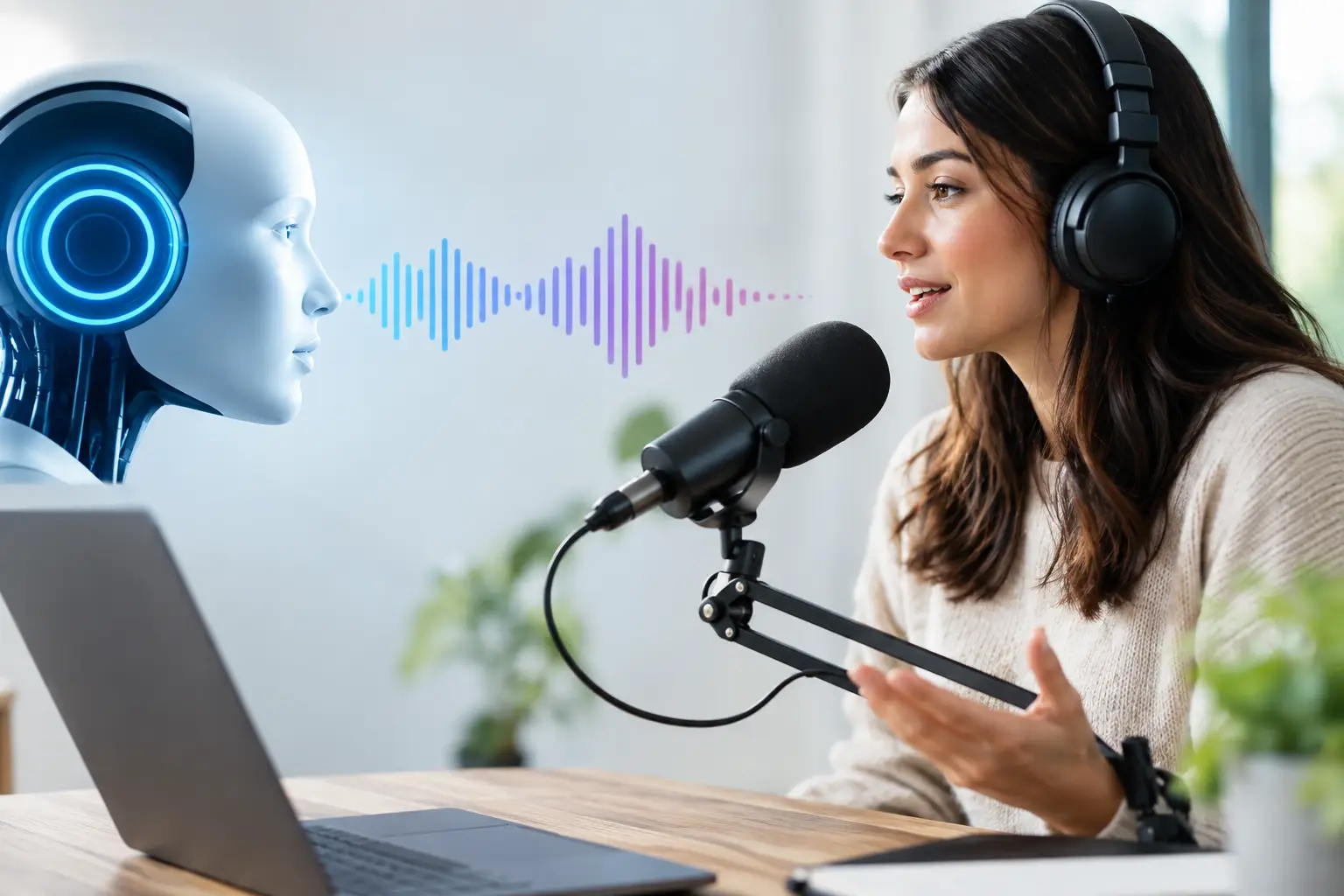
A character can look polished, the captions can land, and the hook can be strong - but the wrong voice can still make viewers swipe away. The decision between AI narration versus human voice is not about picking a permanent winner. It is about matching the production method to the content, audience, publishing schedule, and result you need.
For creators building short-form series, faceless channels, product explainers, or recurring social episodes, voice is a production decision. It affects how quickly you publish, how consistently your character sounds, how easily you revise a script, and what each finished video costs to make.
AI Narration Versus Human Voice: The Real Trade-Off
Human voice talent brings lived experience into a read. A skilled narrator can interpret subtext, shift energy in a sentence, and respond to a creative direction such as “less salesy” or “make the final line sound relieved.” For storytelling with emotional turns, comedy that depends on timing, or a founder speaking directly to customers, that interpretation can be the point.
AI narration changes the operating model. Instead of booking a session, sending a script, waiting for a take, and paying again when the copy changes, you can generate narration as part of the production workflow. Make a script adjustment, regenerate the affected scene, and keep moving.
That speed matters when your channel depends on volume. A trend may have a useful window of a few days. A product update may need a new explainer before the old version gains traction. A recurring character series may need five episodes this week, not one perfect episode next month.
The trade-off is straightforward: AI gives you repeatability and revision control at scale. A human gives you richer spontaneous interpretation. Neither is automatically better. The stronger choice depends on what the video has to accomplish.
Where AI Narration Wins
AI narration is built for content systems. If you publish frequently, test multiple hooks, localize scripts, or produce a series with the same on-screen character, it removes a major scheduling bottleneck.
Fast revisions without restarting production
Short-form scripts change constantly. You may cut a claim for compliance, replace a weak hook, update a price, or tighten a scene after seeing the first render. With a human narrator, even a two-line update can require a new request, a new recording window, and a new invoice. It can also create audible differences if the rerecord happens on a different day or setup.
With AI narration, the revised text can become a revised voice clip immediately. In an episode workflow, that means changing only the scene that needs work rather than rebuilding the full video. The result is less friction between feedback and publishing.
Consistency across a series
A recognizable voice helps turn separate videos into a channel people recognize. Viewers may not consciously identify the voice, but they notice when a recurring character suddenly sounds different from episode to episode.
AI makes voice consistency practical. Once you select a voice that fits the character and audience, you can maintain that sound across dozens of episodes. This is especially useful for animated hosts, educational characters, fictional series, and faceless brand content where the voice is part of the format.
More output at a predictable cost
Hiring voice actors can be the right investment for a flagship campaign. It becomes harder to justify when you need daily or near-daily content. Costs increase with script length, usage rights, revisions, rush delivery, and the number of variations you want to test.
AI narration gives creators a more predictable production model. You can test alternate openings, calls to action, and episode structures without treating every new read as a separate purchase decision. That does not mean every generated voice is ready to publish. It means you can iterate enough to find a stronger version before the content window closes.
Better fit for data-driven testing
Most social videos do not fail because the microphone was imperfect. They fail because the first seconds were not compelling, the pacing dragged, or the message did not match the audience.
AI narration makes it easier to test those variables. Try a faster delivery for a TikTok hook. Use a calmer read for a financial explainer. Create two versions of the same scene with different opening lines. When the voice is generated inside the workflow, experimentation does not require rebuilding your production calendar.
Where Human Voice Still Has the Edge
There are projects where a real person is not optional. A human voice is usually the stronger choice when the audience needs to feel direct personal presence: a founder announcement, a customer story, a sensitive nonprofit message, or a premium brand film centered on emotion.
Human performers also excel when the script leaves room for instinct. They can find a pause that makes a joke work, emphasize the one word that changes a line’s meaning, or deliver an imperfect breath that makes a story feel personal. Those details are difficult to specify in text alone.
Live or long-form formats may also favor people. Podcast interviews, webinar hosting, sales calls, and unscripted reactions depend on responsiveness, not just clean narration. AI can support these formats with intros, ads, recaps, and translated clips, but it cannot replace a genuine conversation.
There is also a trust question. If the content implies that a specific person is speaking, do not use a synthetic imitation without clear authorization. Use voices you have the right to use, follow platform rules, and avoid creating confusion about who said what. Speed is useful only when it does not create a credibility problem.
Choose by Content Type, Not by Hype
The easiest way to make the decision is to start with the job of the video.
AI narration is often the practical choice for recurring explainers, list videos, character-led stories, product tutorials, educational clips, daily news-style formats, and localized versions of existing content. These formats benefit from repeatability, fast script changes, and a stable voice identity.
Human voice is often worth the extra coordination for high-stakes brand launches, testimonial-driven campaigns, personal thought leadership, documentary storytelling, and scripts where vocal performance carries the emotional weight.
The hybrid approach is often the most effective. Use your real voice for content where your identity is the product. Use AI narration for the repeatable content engine around it: tutorials, episodic posts, FAQs, promotional variations, and supporting clips. That gives your audience a human relationship with the brand without forcing you to record every sentence your content calendar requires.
How to Make AI Narration Sound Better
The quality of an AI voice starts with the script. A natural voice cannot rescue copy written like a brochure. Write for the ear: short sentences, clear transitions, and one idea at a time. If a sentence feels awkward when you read it out loud, rewrite it before generating audio.
Punctuation matters more than many creators expect. Periods create stops. Commas create lighter pauses. Paragraph breaks help separate thoughts. For a more conversational read, avoid stacking multiple claims in a single sentence and give the narrator room to breathe.
Voice selection should match the format, not your personal preference. A high-energy delivery may work for entertainment clips and weaken a serious business explanation. A calm instructional voice may fit a tutorial and feel flat in a dramatic character scene. Test the voice against the finished visual, captions, and music rather than judging it in isolation.
Finally, edit for pace. Social content does not need every word removed, but it does need momentum. Cut filler, shorten setup lines, and let the voice move the viewer to the next visual beat. If a scene does not earn its seconds, regenerate it with a tighter script.
Build the Voice Into the Production System
The best narration choice is the one that supports consistent publishing without lowering your standards. For a creator producing an occasional signature video, human performance may be worth every extra step. For a channel built around repeatable episodes, AI narration can turn voice production from a recurring delay into an editable part of the workflow.
LipSync Studio is designed around that second model. A single character image and episode prompt can move through script creation, ElevenLabs voice generation, lip synchronization, scene-level changes, and social-ready output without requiring separate tools for each stage. If one line changes, focus the revision on the affected clip instead of starting over.
Do not choose a voice method because it sounds futuristic or traditional. Choose it because it helps you publish the right content, at the right pace, with a voice your audience will recognize and trust.