
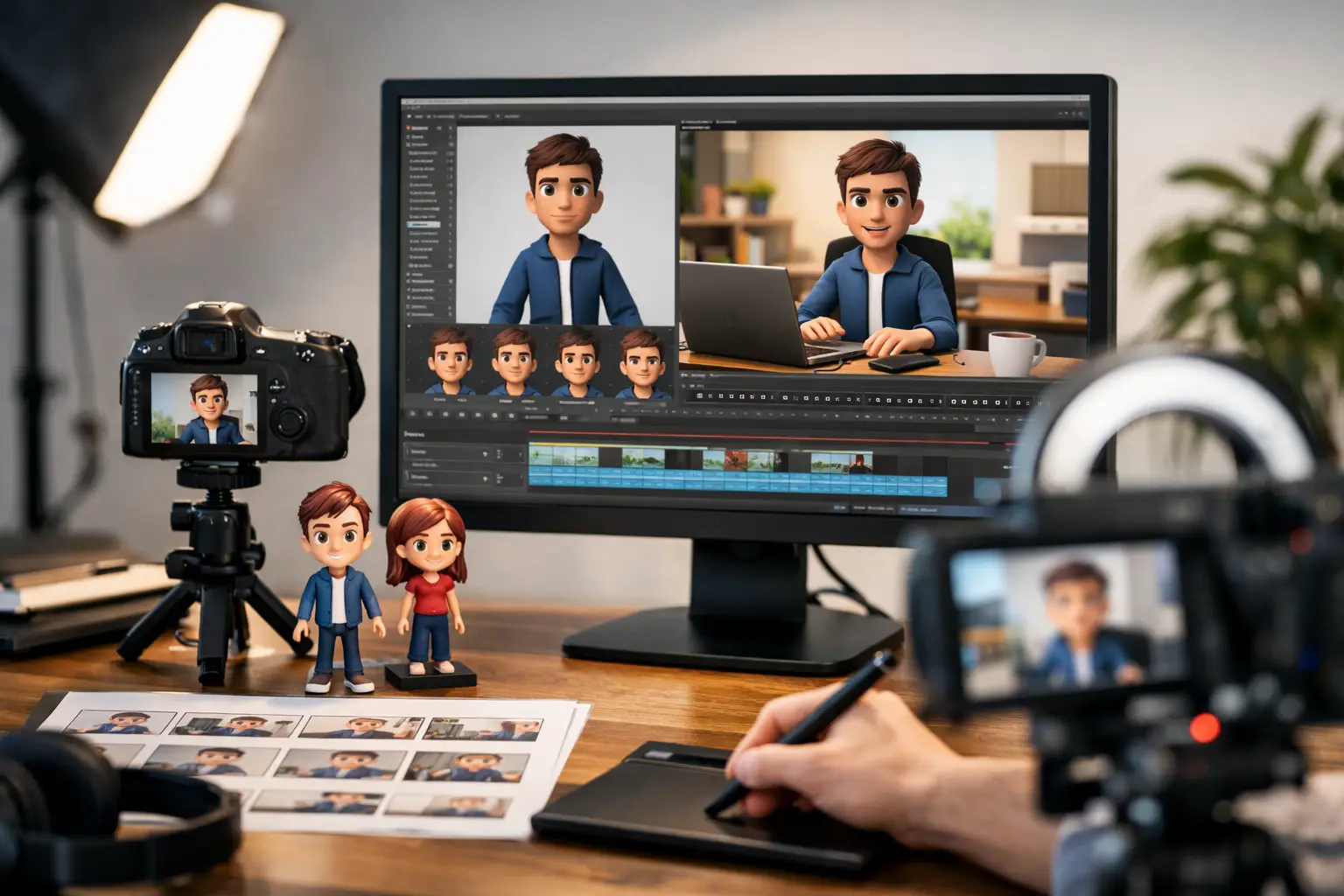
A character that changes voice, attitude, visual style, or story logic every time it appears is not a series. It is a collection of unrelated posts. To create consistent character video series content that viewers recognize and return to, you need a production system that protects the parts of the character that should not drift while keeping each episode fresh.
That system does not require a full animation team. It requires clear character rules, a repeatable episode structure, and an editing process that lets you fix one weak scene without rebuilding the whole video.
Start With a Character System, Not a Single Image
A strong character image is the starting point, but it cannot carry an entire channel by itself. Before producing episode one, define the character as a working asset with rules your future prompts can follow.
Write down the character's name, role, setting, point of view, tone, speech patterns, and visual traits. Keep the description practical. Instead of writing that your character is "funny and stylish," specify that she is a blunt small-business owner who speaks in short sentences, wears a green blazer, and records advice from a compact office.
The details that matter most are the ones viewers notice when they change: face shape, age range, hair, clothing silhouette, vocal energy, personality, and location. You do not need to repeat every detail in every prompt. You do need a stable reference description that can be reused whenever you generate a new episode.
Consistency is not the same as repetition. Your character can react to new trends, answer comments, tell stories, or promote different offers. The anchor is the personality and presentation, not the topic.
Build a Character Bible You Will Actually Use
Keep the character bible to one page. If it is too long, it will be ignored during production. Include a short visual description, a voice description, three personality rules, three phrases or verbal habits, and a list of things the character would never say or do.
For example, a deadpan finance character may use plain language, challenge bad advice, and end with a direct action step. That same character should not suddenly become overly excited, speak in motivational clichés, or deliver vague life lessons. Those boundaries make the character believable.
Also define the audience relationship. Is the character a coach, skeptic, storyteller, insider, teacher, or commentator? A clear relationship makes script decisions faster and gives viewers a reason to recognize the format.
Use a Repeatable Episode Formula
Most short-form character series fail because every video begins from zero. The creator picks a topic, experiments with a format, changes the pacing, and hopes the result lands. That approach creates inconsistent output and makes it difficult to publish frequently.
Choose one core episode formula and use it for at least 10 posts. A simple format is: open with a specific tension, deliver the character's opinion or lesson, show one example, then close with a clear takeaway or question. The subject can change while the viewing experience stays familiar.
For a fictional office manager, the tension might be an employee problem. For a real-estate commentator, it might be a bad listing decision. For a brand mascot, it might be a customer myth. The recurring structure tells viewers what kind of payoff to expect.
Keep episode length aligned with the platform and the idea. A fast reaction may need 20 seconds. A story with setup and payoff may need 45 to 60 seconds. Do not stretch a short idea just to hit a target duration. Strong pacing protects retention better than extra scenes.
Create Prompt Templates for Common Episodes
Prompt templates reduce production time and prevent the character from losing focus. Build a few templates around the series formats you plan to publish most often, such as reactions, advice, storytime, myth-busting, product explanations, or comment responses.
Each template should include the character reference, the episode goal, the target audience, the central topic, the desired tone, and a scene direction. It should also set limits. Ask for short lines, a strong opening, and one main point per scene. That prevents a generated script from becoming a dense wall of dialogue.
A useful episode prompt is specific enough to control the result without scripting every word: "Use the established character voice. Create a 35-second response to a freelancer who underpriced a project. Start with a blunt hook, give two practical corrections, and end with one sentence that encourages viewers to calculate their minimum rate. Keep the setting in the character's office."
Save your best prompts. They are production assets, not disposable instructions.
Keep Voice, Visuals, and Scenes Aligned
Visual consistency is only half the job. A character with the same face but a different vocal personality in every episode will still feel unstable. Select a voice that fits the role, then keep the delivery direction consistent. Consider pace, confidence, warmth, regional character, and energy level.
The right voice depends on the series. A fast, punchy delivery may fit entertainment commentary. A calmer pace may work better for educational content or professional services. What matters is that the voice supports the character's identity and does not compete with the message.
Scene design needs the same discipline. Use a limited set of recurring environments, camera setups, and visual beats. A recurring desk, studio, storefront, or podcast-style frame creates recognition without making every video look identical. Rotate angles and supporting visuals when the story needs them, but avoid changing the whole production style from post to post.
This is where scene-level editing matters. If scene three has an awkward line, the right fix is to change scene three. Recreating the full episode can introduce new inconsistencies in timing, language, and visual direction.
LipSync Studio is built around that practical workflow: start with one character image and an episode prompt, generate scripts and AI voiceovers, render lip-synced scenes, then revise only the affected clip through scene-level chat editing. The goal is not to make production feel magical. It is to make weekly output manageable.
Create Consistent Character Video Series Without Creative Burnout
A repeatable system should make room for creative judgment, not remove it. Batch the work that benefits from repetition, then reserve your attention for topics, hooks, and final approvals.
Start by planning 10 episode ideas around one audience problem or content pillar. If your character teaches marketing, a pillar could be weak social posts. Ten episodes could cover common mistakes, reactions to bad advice, before-and-after rewrites, myths, and audience questions. The theme creates cohesion while giving you enough variation to avoid a stale feed.
Next, generate or draft the episodes in batches. Review the scripts for character fit before rendering. The fastest workflow is not always the one with the fewest clicks. It is the one that catches predictable problems before they reach the final video.
After rendering, watch for three issues: whether the first line earns attention, whether the voice matches the character, and whether each scene has a reason to exist. Edit what is weak, not what is merely different. A series needs controlled variety.
Publish Like You Are Building a Library
Every episode should work on its own, but it should also make the next episode easier to understand. Use consistent naming, visual framing, captions, and recurring language so people can identify the series while scrolling.
You can number episodes if the content is sequential, but do not force numbering onto standalone videos. For most social channels, a recognizable format is more useful than "Episode 17" in the opening frame. Save explicit episode numbers for stories, investigations, tutorials, or continuing narratives where order matters.
Track performance by format, not only by individual post. If comment-response videos consistently produce longer watch time than general advice, make that a larger part of the content calendar. If a character's catchphrase is getting ignored, remove it. Consistency should support results, not trap you in habits that no longer work.
The best character series feels easy for the audience to follow because the hard work happened behind the scenes. Set the rules once, build around a few proven formats, and make targeted edits as the series develops. Then each new prompt becomes another episode, not another production problem.