
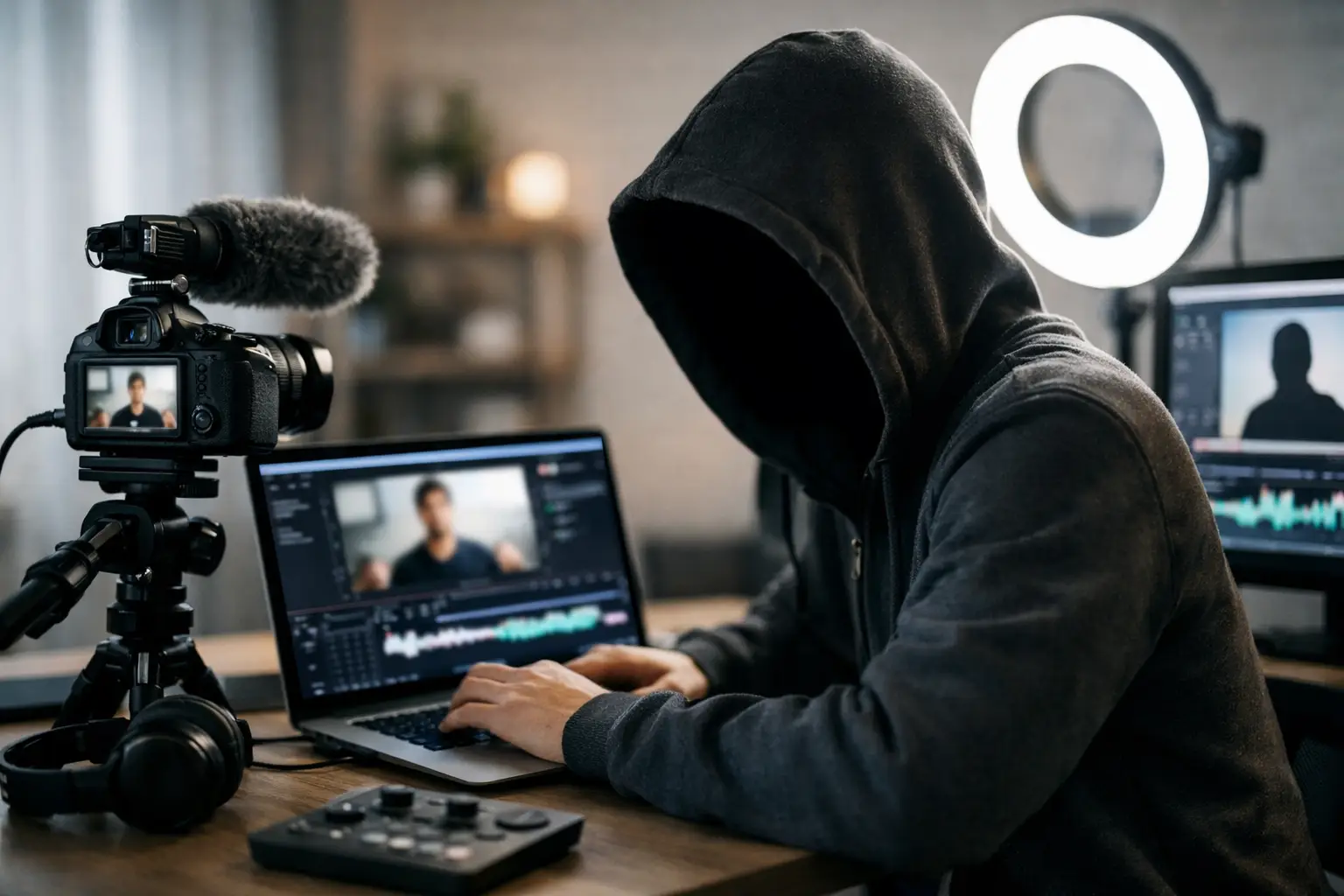
A faceless video creator is not just a way to avoid being on camera. For serious social publishers, it is a production model: build a recognizable character, give that character a point of view, and turn ideas into repeatable episodes without booking shoots, recording takes, or stitching together five separate tools.
That model works when the content feels designed, not automated. The goal is not to post anonymous filler. It is to run a channel or brand presence with a consistent voice, visual identity, and release schedule while keeping production lean.
What a Faceless Video Creator Actually Does
The phrase can describe anything from a stock-footage editor to a text-to-speech app. That is why many creators end up with a workflow that still requires manual writing, voice generation, avatar animation, editing, captions, and publishing. The creator may be faceless, but the process is still labor-heavy.
A practical faceless video system starts with a character image and a written episode idea. From there, it needs to create a script, produce a natural voice, animate lip synchronization, organize the story into scenes, and render a format built for the platform. The difference is operational: you are producing episodes, not isolated clips.
A recurring character gives viewers something to recognize. It can be a sharp-talking financial commentator, a fictional store owner answering customer questions, a historical narrator, or a branded mascot explaining a product category. The face does not have to be yours. The personality and publishing standard still need to be clear.
Start With a Repeatable Episode Format
Most faceless channels lose momentum because every post starts from zero. A better approach is to choose one episode format that can support dozens of topics. That creates speed without making every video sound identical.
For example, a local service business might use a character to answer one customer objection per video. A media publisher could run short opinion episodes around one daily news angle. A marketing operator may create a series that breaks down one campaign lesson at a time. The subject changes, but the structure stays stable: hook, point of view, proof or example, and a direct close.
This matters because viewers learn what they are getting. It also makes scripting easier. When an episode has a defined job, prompts become more specific and revisions become faster.
Before generating anything, decide three things: who the character is speaking to, what the character is known for, and what each episode should make the viewer do next. That action might be following the channel, commenting with an opinion, visiting a business, or watching the next episode. If the answer changes with every post, the content will feel scattered.
Build the Character for Recognition, Not Novelty
A strong character image does more than supply a face for lip sync. It establishes the visual system for the channel. Viewers should be able to recognize the character in a feed before they read the caption or hear the first line.
Choose an image that fits the content promise. A polished business persona can work for B2B explainers. An illustrated character may fit educational or entertainment content. A more expressive image can suit commentary, storytelling, and humor. What matters is that the image supports the tone of the scripts.
Avoid changing the character style every week simply because new AI visuals are available. Frequent visual resets make it harder to build memory. If you need variety, change the scene background, supporting visuals, pacing, or episode topic while keeping the main character consistent.
There is a trade-off. A highly specific character can create stronger channel identity, but it can also narrow the kinds of stories that feel believable. A general host is more flexible, yet less distinctive. Pick the version that matches your publishing volume and niche.
Write for the First Two Seconds
Faceless content has no personal camera presence to rescue a weak opening. The script has to earn attention immediately. Start with a claim, tension point, surprising fact, or question that directly matches the viewer's interests.
“Most businesses waste money on ads for one avoidable reason” is stronger than “Today, we are talking about advertising.” “Your customer is not ignoring your offer for the reason you think” creates more curiosity than a generic introduction. The opening should make a clear promise, then the rest of the episode should deliver on it.
Keep spoken sentences short. AI voices and lip-synced characters generally perform better with clean phrasing, natural pauses, and one idea per sentence. Dense paragraphs may read well on a screen but can sound rushed when spoken.
The script also needs a viewpoint. A faceless host should not merely repeat broad advice anyone can find elsewhere. Give the character a usable position: what to do, what to avoid, and why. That is what turns generated video into publishable content.
Keep Editing at the Scene Level
The real test of a faceless video workflow is not generation. It is revision.
A script can be nearly right and still need one changed claim, a shorter setup, a clearer call to action, or a different visual beat. If a small adjustment forces you to remake the entire video, output slows down and quality drops. Scene-level editing lets you change the affected clip instead of rebuilding an episode that already works.
This is especially useful for marketers and business owners. Offers change. Compliance language changes. Product details change. A single scene may need an update after a campaign is already planned. Targeted revisions keep those changes manageable.
LipSync Studio is designed around this episode workflow: a character image and prompt become editable scenes, with script generation, ElevenLabs voiceovers, HeyGen lip synchronization, and social-ready output handled in one desktop production system. The key advantage is not simply generating a talking character. It is keeping the episode editable when the message needs to change.
Publish for the Platform, Not Just the Render
A finished video is only useful if it fits the environment where it will be viewed. TikTok, YouTube, and Facebook can all support short-form character content, but the audience behavior and distribution context are not identical.
For short vertical feeds, make the first frame readable without sound. Use direct on-screen text when it adds context, but do not cover the character with captions or graphics. Make the visual hierarchy obvious: viewers should know who is speaking and what the episode is about at a glance.
For YouTube, a faceless character can support both Shorts and longer episodic formats. Short clips are useful for testing hooks and topics. Longer videos give the character room to explain, compare, or tell a story. If a short performs well, consider it a signal to build a deeper follow-up rather than repeating the same point.
For Facebook, clarity and practical relevance often matter more than fast trend-chasing. Local businesses, community-focused publishers, and service brands can use character-led videos to answer common questions in a format that is easy to share.
Do not publish the same file blindly everywhere. The core episode can stay the same, but the caption, thumbnail frame, and call to action should reflect where it is being posted.
Measure the System, Not One Video
A faceless channel becomes valuable when you can see which production choices create results. Track more than views. Watch early retention, average watch time, comments, shares, follows, clicks, and the time required to produce each episode.
A video with moderate reach but strong watch time may have a better core format than a high-view video driven by a temporary trend. Likewise, an episode that earns leads or qualified messages can be more useful to a business than a broad entertainment post.
Review results in batches. After ten or twenty episodes, look for patterns in the hooks, topics, character delivery, and ending style. Then change one variable at a time. If you rewrite the character, visual style, script length, and call to action all at once, you will not know what improved the result.
Use Automation Without Losing Editorial Control
Automation removes repetitive production work. It does not replace judgment. You still need to check claims, ensure the voice matches the brand, remove vague language, and confirm that the character is saying something worth watching.
That editorial pass is where many channels separate themselves. A generated first draft may be fast, but a tight review makes it credible. Check every episode for a clear hook, one central point, accurate wording, natural pacing, and an ending that gives the viewer a reason to respond.
The best faceless content engine is not the one that produces the most videos. It is the one that makes consistent, editable episodes easy enough to publish without lowering your standard. Start with one character, one repeatable format, and a schedule you can actually maintain. Then let the results tell you what deserves more production.